Saturday, March 22, 2025

Final Reflection

As I finish my Cambridge Final Project, I’m happy with what my group and I created. The process has been challenging, but also fun. From brainstorming ideas to developing the plot and characters, every step has helped shape the opening scene. In this final blog post, I’ll reflect on the process, what I learned, and how my project has changed.

When we first started working on the film opening, I had several ideas in mind, from different genres to different ways of telling the story. But after talking with my partners, Camila and Charlee, and getting feedback from the teacher, we decided to focus on a crime drama. This genre allowed us to create a plot that was exciting and suspenseful, while also letting us explore different filmmaking techniques. We chose a story about Ben, who gets caught in a dangerous situation, and Detective Travers, who helps him uncover the truth. The twist at the end, where Ben’s true identity is revealed, added an extra surprise.

After a lot of research, we decided to use cross-cutting in our film opening between Ben writing a letter and the police preparing a crime scene. This created tension and drew the audience into the mystery. The use of close-ups, police lights, and sirens, which my group suggested, helped make the scene more intense. To keep everything ogranized, my group and I created a storyboard and a script, this made the production process easier.

Character development was one of the most important parts of the project. I used Vladimir Propp’s Character Theory to help make sure each character had a specific role in the story. Ben is the hero, Ivan and Maverick are the villains, and Travers is the helper who tries to assist Ben.

Throughout this project, the feedback from other classmates was very helpful. In group meetings, we shared ideas and gave suggestions to improve each other’s projects. For example, when Sofia’s group had trouble filming a moving car, we came up with an idea to use a still shot instead of a shaky handheld one. This teamwork showed me how valuable feedback can be in improving a project.

Looking back on this project, I’ve learned a lot about filmmaking, especially in crime films. From developing characters to creating tension with editing, every detail helped bring the story to life. I’m proud of how far my project has come and excited to show the final result. This experience has taught me important skills that I will carry with me in the future, writing this blog post, I realize just how much I’ve learned! This project has been constantly on my mind for the past two months and now it's over, I never thought I would enjoy it as much as I did. 

Thursday, March 20, 2025

Editing CCR

Right after I finished filming, I went straight into editing my CCRs. In this blog post I will be discussing the editing process and some adjustments I had to make to prevent my video from being too long or too hard to understand.

To edit, I used iMovie since it was more convenient, especially because I had also used it to edit my film opening. I started by importing all my media and organizing it in the right order.

While answering the questions in the video, I added clips from the film opening to illustrate my point and help viewers better understand what I'm explaining. For example: 

click here to view example

In addition, I added captions to help the viewers understand better what I'm saying. Since English is not my first language, I'm well aware that some words I pronounce might be hard to understand, so I figured adding captions would be helpful. 


One more adjustment I had to make was speeding up the screen recording of the computer. Like I mentioned in my last post, I screen recorded my Mac while typing the blog's text to create the effect of the blog writing itself. But since I write incredibly slow, I had to speed up the clips by x10! If I had skipped that step, the video would probably be ten minutes instead of four...

Overall, editing my CCRs was smooth thanks to iMovie. Adding clips from my film opening, captions, and speeding up the screen recording helped make the video clearer and more engaging. I also learned how small adjustments, like changing the speed of a clip, can make a big difference in keeping the video interesting. In the end, I’m happy with how it turned out and glad I could make it easier for viewers to follow along.

Tuesday, March 18, 2025

Filming CCR

Both of my CCRs were filmed at my house. Today I will discuss the production of my first CCR that I filmed by myself focusing on questions #1 and #2. 

When I got ready to film, I realized I had a problem: I don't have a tripod! My teacher does offer us tripods to borrow, but unfortunately I forgot to ask for one... I had to improvise a stand for my phone, so I glued my phone to an upside-down blender standing over a pile of books. It was great.


Then I started filming. First, I filmed myself, recording all the parts where I'm talking or reacting to the talking blog. To film the blog part, I screen recorded my Mac while typing the text. 

In the end, even though I didn’t have a tripod, I found a creative way to make it work. My setup with the blender and books turned out to be a good solution, and I was able to film everything I needed. This experience showed me that problem-solving is an important part of the process and I ended up having a lot of fun filming.

Saturday, March 15, 2025

CCR Script #2

Today I will write the script for my second CCR. For the last two questions, I will create a video were I'm acting like the Cambridge Portfolio Project is a secret mission and filming the second CCR is the last part of it. 

Secret Mission CCR

CU of folder 'Top Secret'
Opening folder
CU of all the mission parts complete except the last one
Ms. Travers behind Omer

MS. TRAVERS: You only have one part left.
OMER: I know. Do you think you can help me?
MS. TRAVERS: This one you have to do on your own... But I can film you.

Cut to Omer walking in the garden
Graphic: How did your production skills develop throughout this project?

OMER: My production skills improved a lot throughout this project, starting from research and planning to making a whole film opening. At first, I studied other film openings and genre conventions to understand better what I'm creating. I also spent time planning and creating a storyboard to keep everything organized and easier in the production process. However, as I started filming, I had to make changes along the way.

One big change was in casting. Originally, Mr. Travers was supposed to be played by my dad, but since he wasn’t available, my group and I had to adjust the character to Ms. Travers, played by my mom. This meant changing some movements and costumes to fit the new personality, which taught me how to adapt while still keeping the story the same.

There were also other challenges, like fixing lighting issues and adjusting camera angles to make scenes look better. For example, filming Ben's legs walking to Travers' office was incredibly hand since the the angle was so low I had to lie on the floor and it ended up looking very shaky. But at the end of the day, through this process, I became better making creative decisions to improve the final project.

Looking back, I can see how much I’ve grown. Earlier projects in class, like practice with editing music videos and foley sounds, helped me prepare for this. Those experiences taught me how to plan well but also be flexible when things don’t go as expected. I started this project focused on just getting everything done, but by the end, I learned that making changes and problem solving are just as important in filmmaking.

Graphic: How did you integrate technologies – software, hardware and online – in this project?

OMER: Technology played a major role in bringing this project to life, from software to hardware and online resources. At first, I used Pixabay to find royalty-free sounds that fit the mood of my film. This was especially helpful for creating teh mysterious atmosphere without worrying about copyright issues.

When it came to editing, I originally tried using Adobe Premiere Pro, since I used it before for other projects, but for some reason I struggled with basic tools like changing a font. I wasted a lot of time trying to edit on Premiere and found it difficult to work efficiently. Because of this, I switched to iMovie, which was much more user-friendly. While iMovie has fewer advanced features, it was the best choice for me to be able to work efficiently with less frustration.

For hardware, I used a phone and shot everything handheld. This wasn’t due to a lack of resources, but rather because it was the most convenient option given the locations and filming schedule. Using a phone, I had more freedom to move quickly and capture scenes naturally without having to set up a tripod. 

Overall, I learned how to work with different tools and adjust when things didn’t go as planned. Even though I had trouble with editing at first, I found a way to make it work, and I used both online and hardware tools to complete my project successfully.

Cut to table with Omer and Travers
Omer chaking the last box on the list
TRAVERS: You're all done!
Omer and Travers smiling and high fiving each other

Thursday, March 13, 2025

CCR Script #1

In my blog post yesterday I wrote that I know what I'm going to do for my CCR videos... This morning in class I was talking to Cami and realized that my ideas are not very creative, so we spent the rest of our class time thinking about new ideas and we came up with really good ones. 

Today I will write the script for my first CCR video, about a meticulous blog inspired by Harry Potter. Inspiration video: video


Living Blog CCR

Omer writing her blog, blog stops working.
BLOG: Hi
OMER: Hey?
BLOG: Do you want to continue writing?
OMER: Yes I really need it for my Portfolio Project...
BLOG: I see... If you want your access back, you're going to have to answer some questions...
OMER: Ok...?
BLOG: How does your product use or challenge conventions and how does it represent social groups or issues?
OMER: Mendacious uses a variety of crime and drama genre conventions, such as having lots of close ups, slow music, low key lighting, low angles, and opening the film with a victim and crime that will launch the investigation. We also used a thick all caps font for a sense of mystery. Regarding to challenging conventions, my mom was the one playing the detective, even though there's been an increase in the portrayal of female detectives in recent years, male actors are often casted as detectives in crime films. Ms. Travers represents the law enforcement officers, she wears dark colors, modest clothes, and a badge, like most officers, but in addition, her office is messy and colorful, indicating on her high spirit personality. 
BLOG: Not bad... But you still have one more question to answer.
Omer looks confused
BLOG: How does your product engage with audiences and how would it be distributed as a real media text?
OMER: Mendacious engages with audience through creating suspense and establishing mystery. Suspense is created with the help of the non diegetic music at the very first minute of the film. And to create mystery, the audience are shown a person rushing to write a letter and a crime scene under investigation. Those two scenes bring up many questions in the viewer's mind without them even realizing it. Some questions that can be brought up are: what happened in the crime scene? who's writing the letter? why are they rushing? what's written in the letter? who's the victim? After the title graphic, more questions might rise, like: who's Ms. Travers? why did she get the letter and no one else? why did the letter made her react the way she did? and more... For distribution, Mendacious would start by premiering at amateur film festivals like: KickOff International Film Festival, Solanin Film Festival, and even my school's own film festival The Lightning Film FestivalThere, it could capture the attention of a distribution company, leading to a theatrical release before arriving on streaming service, like YouTube TV.
BLOG: Wow, I guess you did it. Honestly, I didn't think you would. Just get your access back already it's not a big deal.
OMER: Thanks!
Omer continues to finish her blog.

Wednesday, March 12, 2025

Group Meeting #2

Today in class we got into groups to discuss our projects and CCR's. We were six people in the group: Andre, Isa, Layla, Danielle, Madison, and I. At first, we were all being shy and the conversation was small, but after Isa started talking and sharing about her process and her struggles, everything came more natural and we ended up having fun. 


The main problem we all had was finding creative ideas for the CCRs. The whole time we were brainstorming for ideas and helping each other, while also laughing and having fun. I walked into the group meeting having no idea what I'm going to do for my Creative Critical Reflection, and walked out having almost everything planned out. 

My group had lots of good ideas inpired by funny celebrities interviews. For instance, WIRED's web's most searched questions interview, BuzzFeed Celeb's puppy interview, First We Feast's Hot Ones, etc. 

With the help from the people in my group, I decided that in my first CCR, i will play tennis with a funny twist while answering the first two CCR questions. The twist is that everytime I hit the ball the racket is going to change to a different object that's related to the film opening. 

Talking with other people that are doing the same project as me, hearing about their process and ideas was very inpiring and helpful. I'm very exited to film my CCRs this weekend! 

Tuesday, March 11, 2025

CCR Research #2

Today I will be researching more about the second question (out of four) to make sure I'm answering it correctly and not sliding off topic. 

Question:

  • How does your product engage with audiences and how would it be distributed as a real media text?

To answer this question I will start by researching my target audience. Crime films have an older audience than most movies, but the target audience can depend on the film's subgenre and marketing. In the case of Mandacious, target audience will be 16 years old teens and up, including crime lovers. 

After I established my target audience, I will discuss how my production choices work to engage them. For example, editing the movie in a way that makes the audience feel like they are solving the crime with Travers and Ben. 

I will end my answer with adressing where I will distribute the film. Some ideas that I had in mind are film festivals for amatuer filmmakers, like the film festival in my school, The Lightning Film Festival!  I can also distribute the film in local theaters that promote aspiring filmmakers. 

Saturday, March 8, 2025

CCR Research #1

From now on, my blog posts will mainly focus on the Creative Critical Reflection (a.k.a the last part of the portfolio project!!). Today I will be researching more about the first question (out of four) to make sure I'm answering it correctly and not accidentally discussing irrelevant topics.

Question: 

  • How does your product use or challenge conventions and how does it represent social groups or issues?

To answer this question, first, I will discuss crime genre conventions that I already researched in my 'Choosing Genre', 'Crime Film Openings', and 'Credit Scenes' blog posts. Then, I will note some of the genre conventions that I decided to include in my film opening, and some that I chose not to include. 

For example, in my film I decided to open with the victim and the crime scene that will launch the investigation. 


To conclude my answer, I will discuss the different decisions that were made to represent different individuals in the film opening. For instance, the choice to show Ben's messy desk or Travers' office.

In the next few blog posts, I will take a closer look at my film opening as part of the Creative Critical Reflection. By analysing how my project follows or challenges crime genre conventions and how it represents different social groups, I will ensure that my response is both thoughtful and relevant. This process will not only help me clear my understanding of my own work but also strengthen my final portfolio.

Friday, March 7, 2025

Post Production - Editing Platforms

Editing is a crucial part of filmmaking, but as I recently learned, it can also be incredibly frustrating, especially when using an app you're not very familiar with. Since I had used Premiere Pro in the past for other classes, I decided to edit my portfolio project there thinking it would make the process easier. I expected the editing process to go smoothly, but I didn't think it would be this difficult.

At first, I was excited to dive into the editing process. I imported my footage, ready to start making adjustments, but I quickly ran into problems. Simple things, like changing the font for text or adjusting basic settings, took way longer than they should have. I searched on Google for answers, watched tutorials, and tried to follow along, but nothing seemed to work the way I wanted. It felt like every small thing turned into a huge challenge.

After spending way too much time trying to figure things out, I realized that Premiere Pro might not be the best option for me, at least not right now. I decided to switch to a different editing app, one that was more beginner friendly and allowed me to focus on actually editing rather than getting stuck on technical difficulties.

Even though I struggled with Premiere Pro, I know it's a powerful tool that could be useful in the future. For now, I'm happy with my decision to use something simpler. I'm glad that I can bring my vision to life without spending hours just trying to change a font!


Thursday, March 6, 2025

Post Production - Coloring

Coloring is crucial in film. It acts as a powerful storytelling tool, allowing us to show emotions, set the tone, influence the audience's perception, etc. Today I will illustrate how I edited the color of footage that my group and I filmed to a darker tone. 

I edited the color of the footage on the iPhone photos app. I pressed the edit button at the bottom on the screen, the second one from the right. Then, I adjusted the lighting and color of the entire video by following this pattern: 

- Exposure -50

- Highlights +25

- Shadows -51

- Contrast +12

- Brightness -13

- Black point +1

- Saturation +2

- Vibrance +8

- Warmth -13

- Tint +15

- Sharpness +15

Before:


After:

By changing the colors to a darker shade, the tone shifts to a more mysterious and intense atmosphere. This small adjustment helps enhance the storytelling, making the scene feel more immersive and engaging. 

Wednesday, March 5, 2025

Filming #3 (Last Part)

For the last blog post to illustrate our production process, my group and I decided to do something special. We filmed ourselves working on the last scene of our opening, and edited it to a short funny video: 


If the video doesn't work, click to view video

The purpose of this video is to illustrate our production process and to show how much fun we had working on this project together. The video includes funny BTS moments, footage of us preparing the set, explenations of how we filmed certain shots, and much more. From now on, my blog post will mainly focus about editing and researching for my CCRs, I'm very exited to continue working on the project and finishing it soon! 

Sunday, March 2, 2025

Mr. Travers? More like Ms.

The last part of our production process is to film Mr. Travers in his office. Unfortunately, my dad, a pilot, who was supposed to play Mr. Travers, had to unexpectedly fly across the world and will not be back until the end of next week. This complication has already set us back from the schedule we created for ourselves since we planned to film that scene this week. 

After giving it a lot of thought about who would be a good fit for the role, we asked ourselves, "what if it's a woman?". Today I asked my mom if she would be interested in playing Ms. Travers, and she said yes! 

Since Mr. Travers turned into Ms. Travers,a few changes had to be made. For instance, I printed a sign that will go on Travers' door that says 'Mr. Travers', Tomorrow I will reprint it and update it to say 'Ms. Travers.'


Our plan is to go film at my brother's school this week, most likely Wednesday, and finally, finish with the production process. 

Friday, February 28, 2025

Filming #2

After filming all morning, Charlee and I met again at 7pm to film the second part of our film opening. This time, we shot the crime scene. 

We met at Peace Mound Park and were very excited to film, especially since we prepared a lot. We had costumes and special props that would make the scene look more realistic, for example, caution tape, a hazmat suit, evidence markers, and more. But when we got to the location, we realized that we had a huge problem... The person who was supposed to play the dead body couldn't make it. 

At first, we asked people on the street if they would like to help us, but understandably, no one agreed... After being left with no other choice, we had Noah, Charlee's younger sister, play the role. 


When we got to the location, we looked for the perfect spot to film our crime scene. We needed 4 obstacles to tie the caution tape on, and a sidewalk. After some brief search, we found a spot that met all the requirements and started setting up the set.


It was very hard to make Noa look like a 40 year old man, but we did everything we could to make it look as realistic as possible. 

We followed our storyboard and filmed some extra footage. We stayed in the park for about two hours and filmed most of that time. 
Here are some unedited videos, BTS clips, and pictures from our time on set:


Tuesday, February 25, 2025

Filming #1

Finally, on Sunday Charlee and I met and started filming our opening! I was super excited and I think it's safe to say that it was a successful filming day. We met the first time at 10am and the second time at 7pm. Today I will go over our first part of filming at 10am. 

On Sunday morning, Charlee and I met at her house to film the first scene of the opening. We filmed the scene where Ben is writing the letter to Travers. We started by transforming her dining area to a desk/office room. Everything was moved except for the table which we used as the desk. We added props on the desk such as folders, papers, office equipment, and more. We met at Charlee's house since her dad is the one playing Ben and it was the most comfortable to film at compared to our alternative locations. 


We gave a lot of thought to the props that we put on the table. For example, on one of the folders we wrote "victim 8". We didn't focus on it with the camera, it was on the table while we were filming, foreshadowing Ben's true identity. 


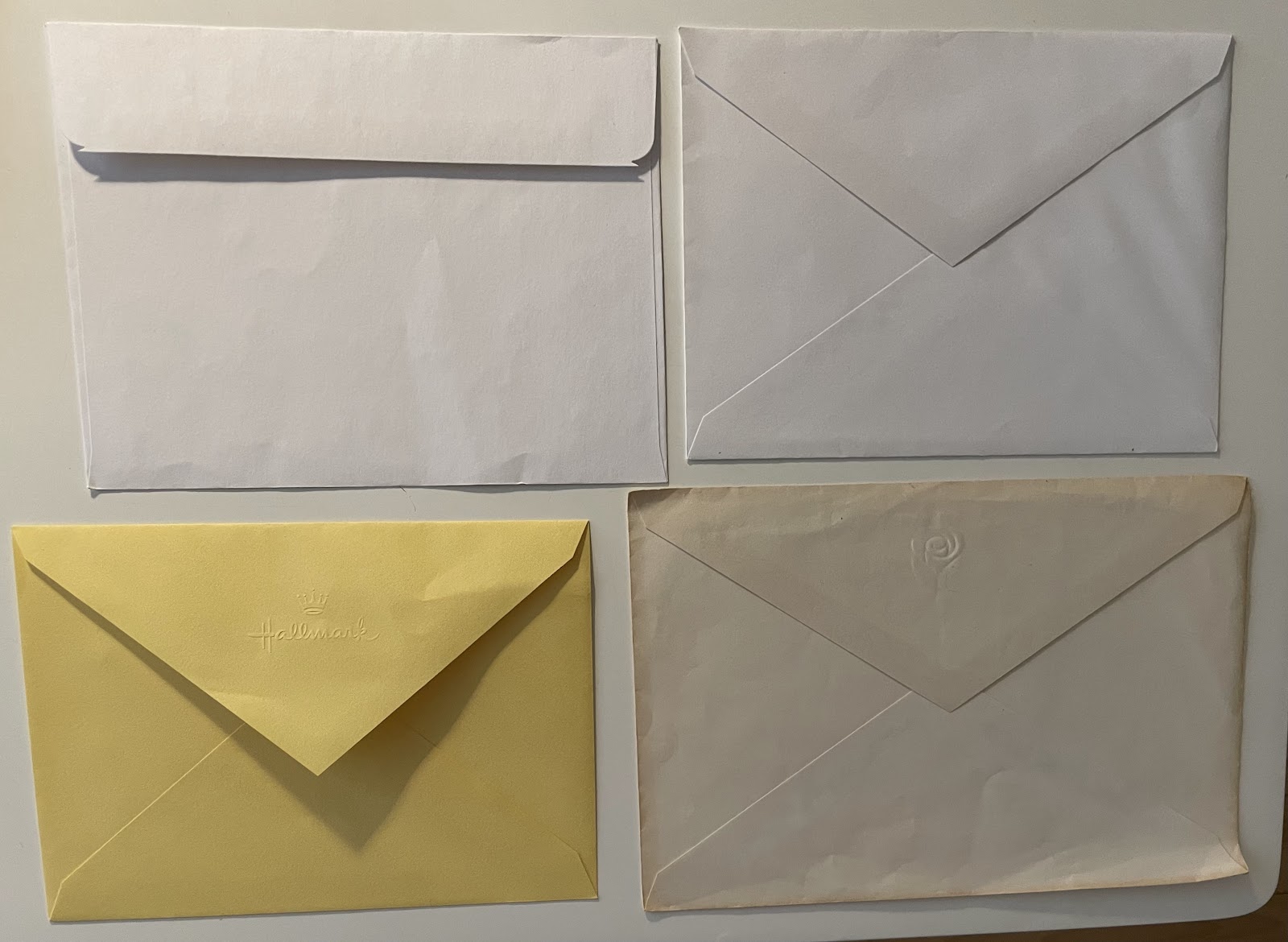
Another prop that we took very seriously is the envelope that Ben gives to Travers. We had four options to choose from. Our first pick was the envelope on the bottom right corner, we thought it looked very cool since it's old and added to the mysterious tone that we are trying to create. But after some more thought, we realized that having an old envelope would make no sense since the letter itself is not old, so our final choice was the yellow envelope. We chose the yellow envelope since it pops out on the screen and draws attrention to itself. This helps us to develop the purpose that something important is written inside of it. 


For some shots, we needed to get a little creative... For example, to get the high shot of Ben writing the letter, I climbed on a chair to film:


In addition to all the filming that we did in the morning, we were planning to film some more at 7pm, so Charlee tried on her costume for the evening to make sure that it fits and that everything is as it should be. After we were all done, we had a little extra time on our schedule so we discussed and planned in more detail what we would be doing in the evening. 

At the end of the day, our first part of filming went really well. We got all the footage we needed and even filmed some extra! My next blog post will talk about our second part of filming, which had some complications...

Monday, February 24, 2025

Choosing a Title

In film, titles hold a lot of power. They can establish the tone, mood, and genre of the story. They can also build excitement for the film impacting its success. After drawing the storyboard, my partners and I realized that we needed to come up with a name for our movie, so we went straight to work and started brainstorming. 

We all agreed that the title should capture the tense tone of the movie based on crime and lies. As we sat in class, we had many ideas. For example: 
  • On The Run
  • More Than a Witness 
  • The Hidden Truth 
  • Mendacious

After looking into all of our options, we found that some were already taken by other films, and some didn't feel right. After talking about our ideas and concerns for the title, we finally chose the title Mendacious. The meaning of Mendacious is not telling the truth, lying. We picked that title since it matches the mood of our opening, displays what our film is truly about, and almost foreshadows Ben lying all along. 


All of the films mentioned above, are some of the title ideas that we had but were already taken...

In the end, I'm very happy with the name that we chose for our film. I think it establishes the tone very well and captures the mysterious atmosphere. Can't wait to film our project! 

Saturday, February 22, 2025

Audio

Audio is very important in film. Whether it's sound effects or background music, it creates a better experience for the audience by establishing atmosphere, conveying emotions, and making the film look more realistic. Today I will be discussing the audio in our film opening from foley to non diegetic sound. 

Foley

Foley is a technique used to create sound effects after filming to make the audio better in movies, TV shows, and other media. In our project, we will record some foley sound to improve the audio quality. Some of the foley sounds that we will record include:

  • Chalk
  • Footsteps
  • Pencil 
  • Door 
  • Wind 
  • Crumbling paper and throwing it in the trash 


Diegetic sounds

Diegetic sounds are any sounds that come from within the film. For example, dialogues, noises from objects, or music playing in the scene. In our film opening, the diegetic sounds will include our foley sounds and the police siren that will be added in the editing process.

Non-diegetic sounds

Non-diegetic sound is audio that comes from outside the film's world and isn't heard by the characters. Examples include voice over narration and background music. In our project, the non-diegetic sound would be the background music in the cross cutting scene. For that scene we had two potential songs that we wanted to use: The first song is These Boots Are Made For Walkin' by Nancy Sinatra. We contacted Nancy, but unfortunately, we got no response... The second song that we had in mind is La petite fille de la mer by Vangelis, but sadly the artist passed away on May 17, 2022. Unfortunately, those two options are not available for us to use in our project, so my group and I collectively decided to research copyright free music and use that instead.  


resourses:

The Importance of Sound

Foley (filmmaking)

Friday, February 21, 2025

Set and Lighting

Set and lighting are crucial in establishing the tone for the scene. For instance, high key lighting can create a pure and angelic atmosphere, while low key lighting develops more mystery and tension. Today I will be discussing the set and lighting choices for all three scenes in our film opening. 

Crime Scene

The crime scene takes place on a street in an avrage neighborhood at night as Ben is on his way home. To make it appear more real, we will use dark, low key lighting combined with a flashing red and blue lights of police cars. This will create a more mysterious stmosphere. 

Writing the Letter

This scene is set in Ben's house during the early morning, the sun just came out. The lighting will be low key to contrast the quiet morning, with Ben rushing to write the letter in fear. We have chosen to film this at Charlee's house, as it fits out vision best. 

A Letter to Travers

For this scene, we want to create an atmosphere of justice and goodness. It takes place in a police station, so we will use high key lighting to emphasize the authority. Finding a location for this scene has been a little tricky... At first, we planned to use the the conference roonm in the local library, but unfortunatly, when we came to film we discoveerd that reservation had to be made two weeks in advance... It was very challenging to think of a new location for this scene because none of us has access to an office in Weston. However, after hours of brainstorming alternative locations, I remembered my little brother's scool! He goes to a small school in Cooper City that matches our vision for the scene! I plan to go there monday with my dad and ask for premission to film. 


Thursday, February 20, 2025

Costumes and Props

Costumes and props are extremely important to develop a character. Different costumes can help the audience realize different things about the person. For instance, if a character is wearing a ball gown, the audience can infer that she is going to a fancy event. After some research, today I will be discussing the different costumes and props of different characters in the film opening to establish a better sense of who they truly are and what is their role in the movie. 

Ben

Costume: In the opening, Ben will wear an everyday outfit. He might wear a T-shirt and jeans or a sweatshirt and pants. We want Ben to wear a casual outfit since he's presented as a normal innocent guy. 

Props: Ben's props are pen and paper when writing the letter, and a backpack when he's leaving his house for good. 

Travers 

Costume: Travers will wear a work outfit since Ben approaches to him with the letter while being at work. Our vision is that he will wear beige jeans and a bottoned up, blue and white square long sleeve shirt. 

Props: Travers will have a walkie talkie and a cop badge to clarify that he's a detective and that he's at work. 

Crime scene investigator 

Costume: The crime scene investigator will wear a white hazmat suit, a blue disposable mask and disposable gloves.

Props: The investigator will have a white chalk to outline the body on the floor. 


Links to my project!

Film opening: https://drive.google.com/file/d/1AcNTTBNHsSR8AshnbzQAHf-iJLEN2MEc/view?usp=sharing CCRs:  https://drive.google.com/file/d/1Yww...